-->
Showing posts with label compassion. Show all posts

23 February 2014

Clarification of Psychiatry: What It Is and What to Do About It

Psychiatry is the following two-fold act:

Part 1: Inventing discrimination.
Step 1: The psychiatrist picks out people he doesn't like based on their behaviors.
Step 2: Everything the psychiatrist doesn't like is labelled part of an illness.
Step 3: Every side-effect caused by the medications prescribed is labelled part of the illness.
Step 4: Pretend, with no evidence, that all things labelled part of the illness are a chronic, incurable, biological, genetic disease, and that the only treatment is medications which, in fact, cause all the behaviors described as part of the illness.

Part 2: Brainwashing.
Step 1: Isolate someone from their friends and family. Give them no contact to the outside world. Take away their posessions. Treat them as inferiors.
Step 2: Reprogram them to convince them all pleasure is bad and all pain is good.
Step 3: Hurt them over and over again.
Step 4: Release them into the world, finally, when they have given up on life.

It is my belief that all psychiatrists must be professionally disabled, and disallowed from doing their profession. There are a list of concrete rules, directed at psychiatrists, which would prevent them from doing their discriminatory and harmful jobs and which are based on pure common sense. Here are some:

  1. Everyone in a mental hospital must have the same rights as people in a physical hospital. E.g. cell phones, Bible study, hugging, computers, exchanging notes, publishing written material for distribution, etc. are to be allowed.
  2. You are not allowed to punish anyone for legal activities. You are only allowed to punish people through recourse to the law, for illegal activities.
  3. You are not allowed to claim something is "scientific" or "known" unless it has been shown to be experimentally valid through scientific experiments. Science is in the business of determining causation, not engaging in wild, baseless speculation. Consequently, none of the data in psychiatric journals as of this writing is to be drawn from, because they all postulate biological and genetic causation for behaviors when no causal link has been established.
  4. You are not allowed to prescribe medication chronically as the sole treatment for mental behaviors which probably have psychological causes. You are not allowed to cause brain damage just because you don't like someone's behavior.

If we as a society followed even just one of these rules, psychiatry would be completely defanged and psychiatrists wouldn't be able to find a job, because their profession would be rendered obsolete.

22 November 2013

Obtaining a Point of Concentration in Difficult Times

In general, there are two kinds of good in this world. There is all-around general good, which I would call "the good of the light," then there is a point of concentration surrounded by darkness or pain or harm or even evil, which I would call "the good of the dark." There are a few things to keep in mind about the latter kind of good.

For one, it's perhaps difficult to imagine, but this kind of good is not a simple inversion of the good of the light. You cannot simply become one with the darkness, declare that evil is necessary, surrender yourself, and call it good. On the contrary, it is in these occasions where a strong sense of your self and your morality is the most important. Notions of surrender work best in situations of peace. In difficult times, we need fortitude.

The will plays a role in these situations. But the technique of wrangling the will involves a loose grip. The will is like a horse; it can't be forced into submission, it has to be coaxed into submission. Will is an important tool, which needs to be kept in submission to the whispers of the soul and to faith in the greater good. In the case of difficult times, it is an alchemical combination of will and faith that is used to obtain the point of concentration in the midst of darkness, which in turn transforms ordinary negativity or hardship into the good of the dark.

Ordinary darkness is darkness combined with ignorance. It is like a suffocating dark cloud of smoke. The good of the dark is like a clear dark sky littered with stars, or like the city glimmering at night with the light of streetlights. The trick to transforming the one into the other is to find the point of concentration in the midst of darkness.

We should break down this notion of a point of concentration. It has two components: faith and will. Faith is an all-around general sense that positivity exists, and because of its mere existence, positivity pervades all things. Faith is the universal act of uncovering which reveals good, just as a cloud dissipates to reveal stars above or city lights below, or just as the earth is removed to reveal precious gems. This potential for uncovering is a timeless presence, unconditioned by comings and goings.

Will involves two things. It involves a personal self which has the ability to actualize things, and it involves something to be actualized. The personal self and its tools for transformation are fairly well understood. The thing to be actualized, in this case, is something nice and of comfort. Its nature is fairly simple: some form of light, a "good of the light," which does not attempt to transform good into bad.

The world today is a rather dark world. It's full of diseases, conflicts, immorality, income inequalities, and so forth, which make the place very dark. There is a positive side to darkness, though. Only darkness has the ability to generate new, good things, when there is suitable focus. The Qur'an speaks of two kinds of trials: trial by pleasure, and trial by pain. Both ordinary pleasure and ordinary pain are forms of suffering, pain in particular. The reason ordinary pleasure is a form of suffering is because ordinary pleasure revels in the good of the light, but is unclear about the nature of the good of the dark. And, due to the changing nature of things, light will become dark, and then ordinary pleasure becomes a mere pastime. The reason pain is suffering is obvious; we experience it, but don't want to. And therein lies the key.

I recently have been battling with hatred of psychiatry. It's a recurring theme in my life, due to the trauma and post traumatic stress disorder caused by the psychiatric experience. But in this dark world, trauma comes from all directions. It is said that in the future, there will be so much trauma that the lifespan of humans will only be ten years. A lot of people also face trauma caused by the prison experience. Mental wards lead to hatred of psychiatrists, prison seems to lead to hatred of the cops. The difference is that prison punishes you for having hurt someone, while psychiatry punishes you for having been hurt. (Psychiatry, therefore, is worse than prison.) The challenge in situations of extreme darkness like these is to find a generous and wholesome point of concentration.

For me, I found that finding this point of concentration tends to be a complex path beginning with the statement, "I do not want this to happen to me." Thankfully, due to our general and intrinsic goodness, when we're in a state of extreme pain, what we'll tend to focus on is the "want" part. You clearly don't want to be in pain. Well then, what exactly do you want? What makes the situation so unbearable? Then the conversation then moves to, "If this situation were just a little bit more such-and-such I would be okay." The trick is to rest and observe. Try not to fight too much. Inevitably, after wishing for a little bit more such-and-such, you'll run into the brick wall of "Well, that's not what's going to happen." Then you'll begin naturally to narrow down what you want. You'll come up with a statement, "Even if it were just a little tiny bit more so-and-so I would at least be satisfied." If you observe, what you'll notice is happening is that a pulsating cloud of darkness is slowly gaining heat and concentration, just as in the birth of a star, and inevitably you'll reach a point where you begin to shed light.

When you shed light, you'll notice what you're doing is taking ownership of your negativities, and your painful experience, and formulating a positive identity and lifepath. Understanding the process from ordinary pain to positive lifepath is essential to surviving negative places, such as Planet Earth and America.

We should return to the Buddha's prophecy about the lifespan of humans. People are eventually going to be so beset by negativities that they will live to be only ten, and humans will be so rare that when they meet they will kiss each other on the mouth. This is a prophesy of the Buddha; it is the infallible word of the Buddha and incapable of error. But we still have a choice, as in ages past. We have a choice to follow our stupid whims and fancy and hurt and exploit people for perverse reasons, or we could be good-of-the-dark people. Rome had a choice in the past. Among other choices, they had the choice between continuing the sundry Pagan assumptions which ignorantly pretended darkness was light, but they chose honest, dark forgiveness in Christ and his purification of crucifixion. That was one choice. Today, we have similar choices. The cumulative effect of these choices is the positive ground for human enjoyment and development which will be in place when humans begin to increase their lives again from age ten back to age 80,000.

When I first heard that humans will be so rare that when they meet they will kiss each other on the mouth, I envisioned lone wanderers in a bleak, post-apocalyptic landscape, beset by hunger and loneliness, wishing in vain for signs of human life. What the Buddha did not mention was Google Glass, bioelectronic implants, and Internet dating. The Buddha said that humankind will face an apocalyptic fall after a seven-days war. The Buddha did not mention whether or not Google Glass, bioelectronic implants, etc. would survive the fall. I propose that if the technology survives, even if the Buddha's word is fulfilled, it's possible that in the interrim between these rare, mouth-kissing meetings, these technologies, or perhaps something functionally similar, will make life at least bearable. We needn't be reduced to lone wanderers as in the image above, but rather we could continue to enjoy the fruits of previous civilization and continue to develop humanity positively.

What this all suggests is that if we focus our darkness, whenever our pain and trauma arises, we are contributing to a positive world in unique ways which only good-of-the-dark situations of dark, Christlike regenerative forgiveness can produce. Our age is the age of our animal natures. We have the choice of being dirty, stray dogs who get put down or starve, or animist deities such as Singhamukha who are wholesome and happy (though wrathful) shamanistic healers. The trick to this choice and this transformation is, I think, finding that point or those points of concentration which illuminate our dark lives.

23 April 2013

a remix and / or edit of the words of "The Goddess"

I'm going to have another shouting session. I'll try real hard not to piss anybody off this time. So you'd better f-ing listen.

HEY. Last night, I was asking Mother Earth Herself to reach up with water, dirt, wind, fire, microbes, dioxyribonucleic acid, weird quantum shit, and so forth, and start yanking around who is hurting Her the WORST—setting up these fucking impossible rules and laws exactly 0x0002 feet high with only twenty minutes to read, IF you are lucky enough to KNOW about it... and it LOOKS LIKE the doors are open for business, BUT, guess you need a secret handshake for that. Anyway, I think it'd be funny when SHE starts reaching up and yanking those who have thought "G, let's put a pipeline over a natural well of water to pump oil across the exact fucking place where most of the foods are grown."

Since WHEN is that EVER a good idea? >__<

<end of line>

I'm going to have another shouting session. I'll try real hard not to piss anybody off this time. So you'd better f-ing listen.

HEY. Last night, I was asking Mother Earth Herself to reach up with water, dirt, wind, fire, microbes, dioxyribonucleic acid, weird quantum shit, and so forth, and start yanking around who is hurting Her the WORST—setting up these fucking impossible rules and laws exactly ten feet high with only twenty minutes to read, IF you are lucky enough to KNOW about it... and it LOOKS LIKE the doors are open for business, BUT, guess you need a secret handshake for that. Anyway, I think it'd be funny when SHE starts reaching up and yanking those who have thought "G, let's put a pipeline over a natural well of water to pump oil across the exact fucking place where most of the foods are grown."

Since WHEN is that EVER a good idea? >__<

<end of line>

I'm going to have another shouting session. I'll try real hard not to piss anybody off this time. So you'd better f-ing listen.

HEY. Last night, I was asking Mother Earth Herself to reach up with water, dirt, wind, fire, microbes, dioxyribonucleic acid, weird quantum shit, and so forth, and start yanking around who is hurting Her the WORST—setting up these fucking impossible rules and laws exactly 10^2 feet high with only twenty minutes to read, IF you are lucky enough to KNOW about it... and it LOOKS LIKE the doors are open for business, BUT, guess you need a secret handshake for that. Anyway, I think it'd be funny when SHE starts reaching up and yanking those who have thought "G, let's put a pipeline over a natural well of water to pump oil across the exact fucking place where most of the foods are grown."

Since WHEN is that EVER a good idea? >__<

<end of line>

16 December 2012

Why Enemies are Blessings: Re. Morgan Freeman and Lanza

I'm glad Morgan Freeman wrote the response he did for the shootings in Connecticut. Because I completely disagree. And, actually, my disagreement has solidified my resolve to a) not kill every fucking body I see, and b) not kill myself. (Death, by the way, is not an "opposite to life." Another post for another day, perhaps.) The argument went a little like this:

Freeman: http://www.dailypaul.com/266479/surprising-message-from-morgan-freeman-he-blames-the-media-for-ct-shooting

Me: You're full of shit.

Freeman: Yeah? Why's that?

Me: Because you're spouting the same sort of crap that every cynical psychiatrist does. You want more "mental health research," and like any "mental health researcher," you're looking for the essential quality that makes people essentially and fundamentally bad people from the very start, so you can kill it, quarantine it, sedate it, and obliterate it from the human race.

And to top it all off, you're saying the essentialist quality has to do with desire for fame. FAME! Which shows that you, like most other Hollywood celebrities (I wanted to say "hacks" but that's going too far—in this case, anyway, there's actually evidence against that claim), you believe that:

  1. Everyone wants exactly what you have.
  2. While it was divinely ordained for you to have it, it was not divinely ordained for 99.9999% of the world's population to have it.
  3. All the problems of the world would be solved if everyone just gave up on their dreams and stopped wanting what you have, and instead, adopt a submissive position and accept the crumbs that people like you allow to drop off the table.

Freeman: Well, I read your position, because like every Hollywood celebrity in the world I keep up with the writings of Nathan Foster. It seems like you claim here that you understand the inner workings of school shooters. You say, and I quote, "I have these kinds of thoughts running through my head at least 20 times a day...."

You go on to claim the following: "[W]hether or not the objective world is an evil place where everyone deserves to die will be entirely beside the point. It is quite possible, theoretically, that everyone in the entire universe will rise up as your personal enemy." Taken in conjunction with the post about "Absolute Eclectic Morality," It would seem that you, sir, not only understand the shooter, but empathize with him, and perhaps even agree with him. There is actual evidence, in these three posts, that you believe everyone deserves to die.

So what's stopping you? If you think you deserve fame, and you know killing a bunch of people will get you fame, and you don't think that it is necessarily ethically wrong to kill a bunch of people, why don't you do it then, and gain as much fame as you could ever hope for?

Now this thought is what really crystalized my position, and it illustrates the value of enemies. (Not that Morgan Freeman is a mortal enemy of mine, but he does have a point of view which I completely disagree with, and in this case, that is enough.) The rest of the conversation:

Me: For one, if everybody didn't deserve to die, they probably wouldn't all eventually die. And for another, while I may, from time to time, hold the belief that everyone deserves to die RIGHT NOW, unless I actually have the ability to kill every single person in the world—not just a handful of people in this or that place, but literally everyone—I'm really just tooting my own horn. Everyone is going to die anyway. Why do I need to speed up the process?

And besides that obvious negative point of view, there's a positive reason not to kill everyone as well. There is a possibility that they have something to teach me. See, I'm a firm believer that situations of ignorance are ripe situations for new and meaningful knowledge. As it says in the Bible, "Many are called, but few are chosen." It's perfectly okay to be chosen, or not to be chosen, to be the one who kills everyone in the world. And while it's not certain that there's a reason why I'm not that person, there's a possibility that there is such a reason.

Which leaves me with two options. 1) I should've been chosen but wasn't. In which case, I have an opportunity to root out the real enemy and deal with that spirit. Or, 2) I should NOT have been chosen, and wasn't. In which case, I had something to learn, and it's better that I wasn't chosen.

Freeman: Great, so with your manic/depressive psychosis and acceptance of others, you're going to choose the other option, and off yourself in the basement?

Me: I'm glad you brought that up, because no, I'm not. I'm just like everyone else; I'm going to die eventually, and there's no reason to speed up the process. And there may be an opportunity to make a difference.

Freeman: You seem to be making the argument that living in this world is completely ephemeral. The only reason not to actually kill yourself, or anyone else, for that matter, is based on distant probabilities that perhaps they have benefit to the world. This is also evidenced by your insistance, in your response ("My Perspective on School Shootings"), that to end school shootings, we should train in discovering other-worldly goddesses, rather than human relationships here on Earth.

Me: I do NOT make the claim that life is ephemeral. I DO, however, make the claim that where you live your life is ephemeral, as long as you can make out goddess-Buddhas. If my body here on this Earth is killed, I'm fine with that, as long as I can find a place somewhere else where I can make out Buddhas. The choice is completely meaningless.

Freeman: If the choice is meaningless, why not try your luck with another body in another world, rather this one, which obviously causes you so much pain?

Me: Obviously, Morgan, you don't keep up with my writings as much as you claim, or you wouldn't have missed this post, in which I claimed that it is precisely the decisions which are meaningless—for example, Coke vs. Pepsi, Planet Earth vs. Planet Venus, human-form vs. goddess form, etc.—that are the most important. And not only did I make that claim, but I considered it such an important claim that I advanced the further claim that it is actually the basis for a just and creative society.

Hopefully you know, by now, that I mean exactly everything I say. And if we take the eclectic view of my philosophy, you'll understand that I am completely committed to a) NOT killing myself, and b) NOT killing others. This is a profound vow which, on many days, is like choosing to drink a specific cola-flavored drink. But many days there's actually a moral reason to follow it.

15 December 2012

The Era of Great Pain

It is possible that we are entering an era of great pain. This is an era where:

  • Every concert is a "recreational activity."
  • Every day of work is a "job."
  • Every formal learning experience is an "education."
  • Every animal is a "pet."
  • Every blog post is "self-expression."
  • Every tennis match is a "hobby."
  • Every computer is a "computer."
  • Every piece of food is "food."

Every hallelujah is cold and broken. Every experience is psychological. Every activity is a behavior. And every dissenter is "mentally ill."

Look. Concerts are NOT "recreational activities." They are LIFE. In short, everything is pain. And "living in the moment" has lost all meaning apart from forgetting everything, as though the phrase holds little more promise than recreational drug use.

Work is not a "job." It is LIFE.

Learning experiences are not "education." They are LIFE.

Animals are not "pets." They are LIFE.

Blog posts are not "self-expression." They are LIFE.

Tennis matches are not "hobbies." They are LIFE.

Computers are not "computers." They are LIFE.

Food is not "food." It is LIFE.

We cannot go on as though everything is meaningless. We simply can't continue as a species if everything is trivial and forgettable. NO. Every experience should be profound and meaningful. We MUST take every form of being, doing, experience, and so forth AS SERIOUSLY AS THOUGH OUR LIVES AND THE ETERNAL SALVATION OF OUR SOULS DEPENDED ON IT. When we feel upset, or when we need a little pick-me-up, we cannot simply say, "Recreational activities help pick me up. I should choose a recreational activity that will pick me up. I think I'll go to a concert."

I can't think of any more meaningless thing we could possibly ever think. It is absolutely cynical and wrong. We should NEVER think like that. We should go to a concert because it will ROCK OUR WORLD, or we shouldn't go at all. We should get a job because it will FUNDAMENTALLY IMPACT EVERYTHING, or we shouldn't get a job at all. We should eat food because it will ALLOW US TO COMPLETELY REJUVENATE THE WORLD, or we should eat red-hot balls of iron. There is no excuse. Either you're part of the solution, or you're part of the problem.

If you're part of the problem, you're part of the Great Pain. You'll do nothing but cause everyone around you great pain. If you can't enjoy life, GTFO.

The evil of the machine thrives on insecurity. We feel we have to be "hip enough to be square." But there is NOTHING that makes life more beautiful than insecurity. And if we can't recognize that, then we should demolish all the Universities. We should set fire to all the schools and libraries. We should forbid all scientific and academic inquiry. Because all it will do is make the human race more cynical, more painful, and more evil.

Science is for risk-takers. Knowledge is for risk-takers. Comfort is for risk-takers. Otherwise it is the purest form of curse. And I believe our society is currently cursing itself. I wish EVERYONE would take a moment to LIVE IN THE MOMENT—which, properly understood, means NOT forgetting everything, but THROWING AWAY scientific knowledge, security, money, food, computers, "recreational activities," "jobs," "education," as UTTERLY MEANINGLESS, and living completely in the state where it is possible that the world will DISAPPEAR. That everything you've trained for will DISAPPEAR. That everything you've worked for and earned will DISAPPEAR. And you should live the rest of your life that way.

Ironically, if you don't do that, it would be better if it DID disappear, because all it will cause is Great Pain.

My Perspective on School Shootings

Approximately a year after my psychiatric hospitalization, and as a direct result of it, a number of thoughts I'd been having about the world culminated in a script for a short movie. It was about a school shooter. And it summed up the mindset of such a person in a simple argument, which I've not yet seen in circulation.

See, we tend to think that people commit school shootings because there aren't people "paying attention" to them. They lack the human interaction they need, and the human interaction they get is adverse to psychological health. So they attack a school or workplace in order to "get back" at the people who did them harm.

Now this view seems to make sense, but it leaves something important unexamined. It may explain the Columbine or Virginia Tech shooter, who shot their classmates. It may explain the shooter in Moscow Idaho, as well, since he probably believed that the government was the cause of all his problems, and therefore decided to shoot government employees.

But what about Adam Lanza?

Lanza shot a bunch of grade school children who had absolutely nothing to do with him. There was no reason whatsoever, according to the above-mentioned theories, for him to shoot these children. They were not his classmates. They were not his coworkers. And they did him no harm. This obviously points to this folk theory of school massacres as inadequate. In fact, the fact that the children did Lanza no harm is so obvious that, I bet, it factored in to his decision to shoot them. Which brings me to my own theory.

The thoughts I'd been having culminated in a simple, logical argument, which can be expressed formally. It goes like this:

1) Because of what I've experienced, the world is a very bad place. So bad, someone deserves to die for making it this way.

2) It's no one's fault in particular.


Conclusion: Everyone deserves to die.

Obviously no one has the power to kill everyone in the entire world. The next best option, then, is to kill as many people as possible.

Now this argument may have different flavors. It may take this form, for instance: "The world has been specifically designed to harm me." Or, "People in general exist for the sole purpose of harming me." Or any number of variants. But the key point is the same: existence in general is so awful, based on my own experience, that people who perpetuate this existence must be destroyed. Since it's no one's fault in particular, everyone must be destroyed.

Looking at it in this light, the meaning behind Lanza's apparently meaningless shooting becomes clear. Why unrelated children in an unrelated school? Because who it is does not matter. Everyone deserves to die, and the situation is so desperate that action must be taken right away. Therefore, Lanza decided to shoot as many people as possible as quickly as possible.

Another point ought to be mentioned in regards to the question, "Why first-graders?" Well, first-graders are relatively undeveloped human beings. They have not yet had the chance to become the kind of people who contribute to the existence that people like Lanza have come to despise. Better to kill them, Lanza probably thought, before they become that way, and save them from contributing to that kind of treachery.

So what's the solution to this kind of problem? I can tell you with absolute certainty exactly what the solution is not. The solution is emphatically not psychiatric. Identifying and treating the "mentally ill" shooters before they shoot people will probably result in more shootings. Remember: I have these kinds of thoughts running through my head at least 20 times a day, and they did not start until after I submitted to psychiatric treatment. From my perspective, psychiatric treatment is almost entirely the cause rather than the solution to the school shooting phenomenon, insofar as psychiatry makes existence unbearable.

The solution is to make the world a better place. And I'm not talking, necessarily, about a one-piece-at-a-time strategy. For example, my strategy for doing this, partly, is to simply not exist in this world, and in that way make it better. For example, I've trained myself to see pictures, of goddesses or whatever, as living beings in and of themselves. Then I interact with these pictures, so I don't have to interact with the "real" world. Because the real world disproportionately causes me harm—harm for which no solution readily exists.

Psychology, today, is ill-equipped to deal with this problem. I always laughed when I talked with my therapist, because I would give him a long string of everything that had been going on, and how nothing had been going right, and the only thing he could say was, "Wow, that sounds pretty bad." Psychology has coping strategies for dealing with particular things which cause psychological problems. If the news is upsetting, limit access to the news. If a workplace setting is causing problems, take five minutes to visualize a better place. We have de-escalation techniques for dealing with problematic people. We encourage people to hang out with beneficial friends, rather than harmful ones.

But what happens when there are so many particular things, coming at you from all angles, and with such frequency, that it just seems like the world itself has set out to hurt you? What if you have no beneficial friends? What if it isn't the workplace that's causing you problems, but the entire world? At that point psychology has no answers, and in order to shut you up, refers you to a psychiatrist, who causes more problems. But why not apply these coping techniques to the world itself? Psychology will say that hanging out in seedy bars, for instance, will lead to having seedy friends, and therefore, you should not hang out in seedy bars. So if, living out your life, you have been completely unable to make more than maybe one or two friends who treat you right, why not stop hanging out in the world? Why not hang out with goddesses instead?

One might respond that we should make a commitment to live in the world rather than outside of it, in order to make the world a better place. Yes, of course this is true, but I think it's unreasonable to expect everyone to be able to handle everything the world throws at them all the time. If the world consistently throws us more than we can handle, we may need a temporary alternative.

But that alternative doesn't come from nowhere. Remember, even our pictures of goddesses are anthropomorphic: they're inspired by things in the world. It is quite likely, in fact probable, that our goddesses will behave similarly to people in the world, if we haven't trained our minds. And then, of course, there is no possible escape.

That is why it is of vital importance for people to come up with a wholesome, inspired, concrete philosophy of ethics, or "the way the world should be." This philosophy should be crystalized and clear to the philosopher. It should be founded on a solid basis, such as meditative experience. That way, even if the objective world continues to do nothing but hurt you, goddesses will nevertheless be attracted to your ideas, and, if absolutely necessary, you won't need to live in the world at all. And if your ideas aren't adequate, so long as you're honest with yourself, the goddesses will let you know, and you can revise from there.

Thus if we train people to be honest with themselves, self-expressive, introspective, and fundamentally inquisitive, we will have cut out the basis of mass shootings. If we allow people to question objective reality, formulate self-expressive philosophies of living, and have real and direct intercourse with our fantasies (rather than intercourse mediated through objective reality), whether or not the objective world is an evil place where everyone deserves to die will be entirely beside the point. It is quite possible, theoretically, that everyone in the entire universe will rise up as your personal enemy. But it is impossible for there to be any space anywhere in existence where a goddess-Buddha does not reside, if we've been trained to see them. That is the solution to hateful killings in the world.

13 December 2012

Absolute Eclectic Morality

The last post I made was written in a state of blissful psychosis. And yes, I do mean, literally, psychosis. If you didn't already know, I am an expert in that subject, for reasons which may well be biological.

And in that post I said some things which definitely rung of psychosis, like, essentially, the basis of all morality as being open to the idea of everyone killing everyone. Nevertheless, while the post may have been—quite enjoyably—formed in psychosis (the previous one to that having been formed in a state of depression), the ideas expressed were actually formed, and even named, earlier.

The concept I was expressing I have named "absolute eclectic morality." And the principle behind it is that the basis of morality is not dogma, not intuition, not biology, and not any conceptual framework, but in openness to frightening and painful things. But while some of these earlier posts may well serve as a great introduction, I have yet to explain, to my satisfaction anyway, the way in which an anarchic state of "absolute eclectic morality" culminates in a more orderly state of conventional morality.

Consider this analogy. A man has a positive goal. He wants to make a change in the world. He wants to start a political party. He may think, "What exactly should I do, in society, to put forth my political views?" In his natural thought process, the thought may occur that he should kill a bunch of people whom he disagrees with. Obviously, this is the most expedient way to form a political party. But will it really fulfill the intended goal? If you live in a society where such behavior is acceptable, the goal may well never be achieved, or even formed. How can we achieve anything with the constant threat of death biting at our heels? So this thought is discarded.

We can stop right there, because clearly, in a similar manner, any behavior which is immoral will eventually be discarded. But was the man an immoral man for such a monstrous thought to occur to him? Absolutely not. It was perfectly natural. The process of fulfilling a goal begins first with a state of formation. Okay, I have a goal, now how do I fulfill it? The word "how" here is loaded with possibilities, and in this initial stage, each possibility is an acceptable one. This initial state is what I call absolute eclectic morality, because morality here means that all possibilities are open, eclectically, and will only be adopted or discarded based on their relative merit. The process which follows, of course, weeds out the immoral acts, due to their low relative merit.

So far I've proceeded in a very Confucian way. I've analyzed morality in terms of a "goal variable" if you will. It's entirely external, because the internal state of accepting the goal as valid and moral is taken as a given. But obviously the morality of a goal cannot be taken as a given. There are some goals which are, in fact, immoral. We can't just assume a moral goal.

But while eclectic morality may seem external, it rather seeps inward with the following concept: eclectic morality in no way means that all actions are justified. It merely acknowledges an infinite array of justifiable actions which encompasses all finite ideas. It acknowledges the fact that, in an infinitesimally subtilely distinct set of two situations, not weeping when a person coughs may be unjustified, while slaughtering that person with a knife is completely justified. Even if the two actions are separated by a mere moment, or the smallest of details. Of course the converse is true too; slaughtering the person may be unjustified, while weeping at his coughing may not be. (And obviously this is more often the case.)

But what allows for the sacred distinction between good and evil? It is, in fact, a state of absolute eclectic morality. The morality of an act depends on the entire context of the act. And "entire context" here is implied in the term "eclectic." The formation of goals must therefore also be taken into account. When one internally forms a goal, the context of the goal-formation must be taken into account in an eclectic way. And when that goal is externalized, all the various external methods for achieving that goal must similarly be taken into account.

From either perspective, internal or external, it will function the same way. If you produce a goal, and you're not sure if it is the correct one, absolute eclecticism will demand that you consider the possibility that the goal itself needs to be altered. Not as a return to the original goal, but as a clarification of the greater goal of what it means to be human. And likewise, if your intentions are good, absolute eclecticism will demand that the execution also be good. This is the way my moral understanding functions. And I believe it functions in all situations, internal, external, or otherwise.

29 November 2012

Notes on This Blog and My Previous Post

I'm not going to post here again concerning psychiatry in the foreseeable future, and I want to dedicate this post to explaining why.

What is the purpose of a blog? To me, a blog distinguishes itself from social media, internet forums, chat rooms, and the like because it is literature. A blog constitutes a body of literature, which can be referred back to for reference. In that sense, while social media, internet forums, etc. are temporal, a blog is timeless. Things do not need to be repeated here; as long as I say something once, I can feel comfortable leaving the topic alone.

I see no reason to continue writing about psychiatry simply because I've already said all I wanted. The last post, "The Problem with Psychiatry in Three Quick Arguments," represents the culmination of my point of view regarding psychiatry. It is as crystalized as it can be. This is precisely how deep the rabbit hole goes; I need dig no further.

Sure, I may feel the need to elaborate, but really all I'll be doing is further sharing the ideas in the previous post. And many posts previous to that one elaborated quite well enough. So while I may see the need to elaborate, I see no need to elaborate here.

There is only one concept which I haven't talked about on this blog, which is the solution to the problem. The solution is simple: three agnosticisms, and three behavior modifications. To wit:

  1. Being agnostic about the science.
  2. Being agnostic about the diagnosis—it's validity and it's applicability.
  3. Being agnostic about the treatment—it's validity and it's applicability.
  1. Modifying psychiatrists' behavior of lying.
  2. Modifying psychiatrists' behavior of manipulating.
  3. Modifying psychiatrists' behavior of using coercive and violent force.

These solutions are implied in all my previous posts. But now, they have been crystalized. The problem is crystalized; the solution is crystalized; there is no need for further discussion here. Whether or not these ideas become accepted is a matter for society to deliberate, and though I certainly see the grave danger posed by psychiatry, and I hope others see it as well, it is not my place to dictate what society will and will not accept.

This is not an "Internet suicide" by any means. An "Internet suicide," for those of you who don't know, refers to when a highly opinionated person joins an Internet group and expects everyone to agree with them, starts a dumb flame war when they learn many people don't, and then concludes their presence on the site with a message, in all caps, saying, "SCREW YOU ALL YOU'RE ALL STUPID I'M NEVER COMING BACK HERE AGAIN." At which point exactly no one seems to care. This post is not that, because a) I never expected anyone to agree with me, b) I don't care if they don't agree with me, c) I'm still going to post on this blog, and d) I'm still going to spread my views about psychiatry, just not here.

So please stick around; though you won't see this particular vein of anti-psychiatric philosophy, you can all look forward to a lot more philosophy and beautiful things.

10 November 2012

Blueprint for a Just and Creative Society: Part 2

The two sides of the coin described in the previous article have to do with creativity and justice. I can summarize it like this: 1) When one can choose between two or more social institutions, and the choice doesn't matter, it is important to make a choice and stick with it. 2) When one can choose between two or more social institutions, and the choice is important, it's best not to choose between the institutions themselves, but rather choose the most ethical point of view, and the institution that happens to be most in accordance with that point of view. Choice 1 makes society creative, choice 2 makes it just.

I think it's also important here to touch on one particular choice in the second category that we must make as a society. The choice has to do with a kind of unity. When we make choices of the first category, it is important that we as a society do so in a context regarding sociocultural institutions, agreements, understandings, and so forth that we can trust. While it's important that personalities do not get all mashed up, we have to have some common ground which invites us to view other personalities, and for other personalities to view our own. This gives meaning to everyone, regardless of their choices. (I'm using the word "personalities" here instead of "people" in light of the statement that we form our identity, or our personality, according to the loyal choices we make that do not matter.)

In order for this to happen, we have to be able to trust one another. For there to be common ground, or a level playing field, we have to agree on certain codes of conduct, according to each person's differing ability to accept things. There are a number of these common grounds, like the fact that one dollar is worth the same everywhere in the U.S., the fact that arguments can't escalate to the point of lethal violence, or sexual violence, and so on. The most important of these, of course, is a legal system we can trust to institute our just demands.

But there's another aspect to this as well—an internal aspect. We can't simply rely upon external things like laws and financial institutions to ensure that all our interactions are positive. We also have to have an internal sense of trust for each other, and an internal sense of goodwill. We have to truly have warm-hearted, good feelings for one another. Love and compassion. Then we can get into fights without really fighting. And anyway, if we don't have these feelings, no number of laws can cover every contingency. We have to trust that we can trust each other.

Thus we should be able to have multiple different personalities, some of which radically opposed to one another, in all aspects except the ones which are important, in which case we should be in accord. And these personalities should interact, through the medium of social exchange which we can trust as an ethical baseline. We must all have a sense of trust for one another, as well-founded as it can be. If this isn't possible, neither is a just and creative society.

03 November 2012

Finding Wonderland

I had a dream one time where a conspiratorial reptilian was harassing me and questioning me, harping on me for quite a long time. Because he was a reptilian, I was completely engaged with him during the confrontation. It was sort of similar to The Scarecrow in Batman Begins, though not quite as frightening in nature.

At one point I simply got tired of the whole thing. So I retreated from the world. The reptilian finally realized this and said, "Ah, it's no use. He's lost in Wonderland." He was right.

What is Wonderland?

We always worry about how fast time flies by us. Years become blurs in the past. Days don't even seem to exist. We can't remember if something happened last month, or three months ago. We have this notion that time goes by faster and faster until we reach the inevitable point of our destruction, having accomplished nothing. The only solution, I think, is to go down the rabbit hole.

I think Phillip Dick was right when he wrote about how we have the capacity to change the course of time. He wrote a story about a few punks who took drugs which changed how time flowed. Now, for me, days go by very slowly. They do not fly by. It is better to do things this way, I think. More fulfilling. And I think everyone has the capacity to slow their time down.

See, usually we get caught up in this notion of becoming financially secure. We want security for our jobs, our homes—we don't even want to entertain the possibility that we'll be without a job or without a home. This may be nice, for a while; we may feel we've accomplished something. But the problem begins when time starts to speed up. Which isn't good.

I think we should lose our jobs and our homes. At least, we should put them at risk. Then we should slow time down until it stops. Once we do that, we will have found Wonderland—a shimmering, still and celestial Wonderland where the Queen of Hearts is nowhere to be found. We will have found the place in the universe outside of time and space. It is the only true world of the forms: where every wished-for thing we ever knew is present, for all eternity, right at our fingertips.

Make no mistake, this is not enlightenment. One can live in the world of time and be enlightened. So Wonderland isn't exactly necessary for us. But don't you think it would be kind of nice to slow things down a little bit? Don't you think it would be pleasant for time to cease slipping through our fingers? I tend to think so, and I think that for our culture, finding Wonderland should be a goal.

The world shouldn't be so boring that we want it to pass us by as quickly as possible. Frankly, I think we are all celestial beings, and a little piece of Wonderland, however we get there, is worth finding.

01 November 2012

On the Psychiatrist I Love

I've been visited in dreams by a psychiatrist. She is the perfect psychiatrist.

Not only does she not feel obliged to lie to or manipulate me in any way, but she spontaneously feels compassionate for me. She's willing to give me a hug when I feel upset, because she doesn't feel that compassion is a violation of professional boundaries.

She knows exactly what her drugs do and what they don't do. She knows the science behind them, and because she doesn't have an agenda, I trust what she says.

Once, in the middle of the night, I was shuddering in the fetal position crying out, "I feel so helpless. So powerless." Then she arrived and assured me that, even though she was a psychiatrist, she had my best interests in mind. "I can't trust psychiatrists, they just hurt me. What could you possibly do to help?" I said. "Something along the lines of enlightenment within the very object of pain?" She said, with a wry smile, knowing she'd touched on something I'd told her before about what makes me happy.

I was in tears, so she gave me a hug, then pulled out an eyedropper with liquid. "I'm going to give you something," She said. "What will it do?" I asked. "It's a dynamogen. It will give you power," She said. And I suckled the translucent yellow liquid and fell asleep shortly thereafter.

The first time I met her my reaction was completely spontaneous. I was with a group of people—me, a man with a diagnosis and his friend, and her. The man with the diagnosis demonstrated his diagnosis to the psychiatrist, and she took notes. First, he demonstrated the fact that "mental illness" in itself is a fundamentally creative thing and needn't be medicated. After she scribbled a couple things, he went on to show how freedom and dignity are the most important values for those diagnosed. She jotted a couple of notes and he moved on to the next demonstration.

I had a premonition about it, and I took him aside and told him, "I don't think you should do it. It will send the wrong message." He brushed me off. We went to the roof of the dream-building we were in, and I said, again, "Please don't. This is not the right way to send your message." He ignored me again.

On the roof was a pool, and the man went up to the diving board. Desperate now, I tried to stand in between him and the diving board, but he got around me and dove into the water.

The man did many flips and turns, dancing through the water like ballet. Then he approached an obstacle course, where he was to jump over, then under, then over a set of sail boats, which he did perfectly. Finally he approached the edge of the pool, and the edge of the building, thirty stories up, overlooking the city. Without a second of hesitation, he jumped over the edge and plummeted to his death.

We were all a little shaken, especially the psychiatrist. I looked into her eyes, and they seemed distant. So I wrapped my arms around her. A few seconds later I woke up, with a new archetypal friend and supporter.

This woman is no different than a doctor, psychotherapist, hypnotherapist, or massage therapist. There is no special class for her. She does not exist in a plane above and beyond mere mortals. She doesn't run the show. She is an ally. Every day I make my way through the world, I hope I meet more and more people like her. She's the only psychiatrist I trust right now.

04 October 2012

A Note or Two on Yelling at People

A while back I decided to yell at my therapist. We both agreed that a shouting match was the most appropriate thing to do at that time. No, it wasn't one of those sterile, therapist-y agreements—"I want us to try something new. Let's have a shouting match. Don't be afraid; let it all out." We don't do business that way because it doesn't work. My therapist is a straight-up, no bullshit kind of guy. He wanted an emotional response. Well, he got one.

"Nathan," he said, "you just seem to think these psychiatrists all get together and sit around saying, 'Gee, let's see how many people we can hurt and oppress today.' You really think psychiatrists go to medical school for eight years and live on crappy doctors' wages just because they felt like hurting people was a cool thing to do?"

"They don't have to! The entire system is based on fallacious and fundamentally oppressive assumptions. I don't care what kind of person you are, if you believe that people's minds are diseased, you're going to be oppressive! It's the same as saying you're a flawed person!"

"Great. Tell me: when has a psychiatrist ever told you that you're a 'flawed person?'"

"I've been lucky not to have to work with psychiatrists since the mental hospital. But I know people who have. And if people weren't regularly abused like what happened to me, there wouldn't be a consumer survivor movement."

"See? With you it's always 'Oh, I've heard stories.' What about you? I want you to tell me right now, what evidence do YOU have?"

So I told him my story. I told how I went to the doctor for help because I thought I was sick. How he started talking behind my back to my friends and family about how I should probably get on meds. How I started sensing that people were conspiring behind my back. (Because they were.) And how they hit me with, "You have a mental illness. There's something wrong with your mind and it'll never get better. You'll probably live a half life filled with misery and regret, and take these pills which change the way you see the world but don't make anything better. Oh and be sure to talk to your friends and family about it, see what they have to say. That's important, you know."

"So," He said. "You went to a doctor for help, and he gave you help." (Gasp.) "What a surprise."

"How can you call that help??"

"Look, Nathan. It may have hurt. But he did what he thought was in YOUR best interest. But you give him no credit. You think he just did it all because he had some kind of grudge against humanity."

"You know, NAZI's were all ordinary, nice people too. They only became monsters because they were trained that way. Psychiatrists are trained to believe that people—REAL people—can have something FUNDAMENTALLY wrong with them, with their very minds. That's what they believe."

"Tell me, how many years have you been trained in psychiatry?"

No answer.

"Well I have been trained in psychiatry." (He loads a web page about the WRAP program.) "Look at this program that every mental health professional in the State of Idaho is REQUIRED to take."

From there on I was on shaky grounds. I'd never been formally trained in psychiatry, and though I'd heard things about the consumer-directed movement in mainstream psychiatry, I hadn't looked at it much. There was still a thing or two I wanted to say, though.

Emotions were hot, of course, and the fiery exchange went on deep into the night. But there was nothing about the shouting that wasn't congenial and ultimately beneficial. And we concluded with friendly words: about how he liked to see me "all fired up," how angry we never really get, and so on. The point is: it was beneficial. It was positive and wholesome. If I had not decided to get angry, I would've missed the point.

Let me show you something I made:

The execution may not have been the best, but those goddesses are real. They'll come to me, in the middle of the night after a bad day, wrap their beautiful thighs around me, and get right inside my mind.

They're like, "I fucking hate you. You're a terrible person. I wish you would die. You're bad. I hate you. Just die."

They break my neck. They feed me poison and rip my intestines out. They hurt me, and they don't stop.

They're like: "I hate you. Just die. I fucking hate you."

And suddenly, when the world stops, I burst into tears, look her straight in the eyes, and—the love. We cuddle; flowers bloom, babies coo, birds tweedle, and everything's alright.

You know that feeling of grimacing through an unbearably hot sauna then laying down for twenty minutes in 40 degree water, blissed out like you've taken some cocktail of the most amazing drug, only without the addiction or side-effects... kind of like that. Ladies, I'm telling you, it's hard to compete with an experience like this. (Come to think of it, probably shouldn't try either.)

See, in our culture, we're so rational and deliberating and scientific that we forget the heat of emotions. We forget the value of rage and depression, and of tears. I hate it when people say, "Don't cry." Actually I love it, because it makes you cry. The more they say it the more you cry. That's why it's so nice to say. The trick is, don't analyze and deliberate and come to the reasonable conclusion, "She probably doesn't want me to cry. I should stop now." Because tears are the seeds of joy.

I know it's not right to hurt people. I know it's not right to get angry and yell at someone and put them down. But sometimes, if you're extremely careful, it's the best way to show love. If you REALLY love someone, and if you yell at them lovingly, it's like that hot sauna. It opens your pores and all the bad stuff in the world comes out. Then when you cry together, and hug each other, and the birds and the flowers—it's like the cold water. It's bliss. As long as you love, you can't go wrong.

09 August 2012

A Reptilian Buddha

This goes out to all reptilians out there...

From the Lotus Sutra:

Manjushri said, "There is the daughter of the dragon king Sagara, whose years are barely eight. Her wisdom is sharp-rooted, and well she knows the faculties and deeds of the beings. She has gained dharani. The profound treasure house of secrets preached by the Buddhas she is able to accept and to keep in its entirety. She has profoundly entered into dhyana-concentration, and has arrived at an understanding of the dharmas. In the space of a ksana [moment] she produced bodhi-thought, and has attained the point on nonbacksliding. Her eloquence has no obstructions, and she is compassionately mindful of the beings as if they were her babies. Her merits are perfect. What she recollects in her mind and recites with her mouth is subtle and broad. She is of good will and compassionate, humane and yielding. Her will and thought are harmonious and refined, and she is able to attain to bodhi."

The bodhisattva Wisdom Accumulation said, "I have seen the Thus Come One of the Sakyas [i.e. the Buddha] throughout incalculable kalpas tormenting himself by doing what is hard to do, piling up merit and heaping up excellence, seeking the Path of the bodhisattva and never resting. When I look at the thousand-millionfold world, there is no place, not even the size of a mustardseed, where the bodhisattva did not cast away his body for the beings' sakes, and only then did he achieve the Way of bodhi. I do not believe that this girl in the space of a moment directly and immediately achieved right, enlightened intuition."

Before he had finished speaking, at that very time the daughter of the dragon king suddenly appeared in front [of them], and, doing obeisance with head bowed, stood off to one side and spoke praise with gathas, saying:

Having profoundly mastered the marks of sin and merit,
    Universally illuminating all ten directions,
The subtle and pure Dharma-body
    Has perfected the marks thirty-two,
Using the eighty beautiful features
    As a means of adorning the Dharma-body.
The object of respectful obeisance for gods and men,
    It is reverently honored by all dragons and spirits.
Of all varieties of living beings,
    None fails to bow to it as an object of worship.
I have also heard that, as for the achievement of bodhi,
    Only the Buddha can know it by direct witness.
I, laying open the teaching of the Great Vehicle,
    Convey to release the suffering beings.

At that time, Sariputra spoke to the dragon girl, saying, "You say that in no long time you shall attain the unexcelled Way. This is hard to believe. What is the reason? A woman's body is filthy, it is not a Dharma-receptacle. How can you attain unexcelled bodhi? The Path of the Buddha is remote and cavernous. Throughout incalculable kalpas, by tormenting oneself and accumulating good conduct, also by thoroughly cultivating the perfections, only by these means can one then be successful. Also, a woman's body even then has five obstacles. It cannot become first a Brahma god king, second the god Sakra, third King Mara, fourth a sage-king turning the Wheel, fifth a Buddha-body. How can the body of a woman speedily achieve Buddhahood?"

At that time, the dragon girl had a precious gem, whose value was the [whole] thousand-millionfold world, which she held up and gave to the Buddha. The Buddha straightway accepted it. The dragon girl said to the bodhisattva Wisdom Accumulation and to the venerable Sariputra, "I offered a precious gem, and the World-Honored One accepted it. Was this quick or not?"

He answered, saying, "Very quick!"

The girl said, "With your supernatural power you shall see me achieve Buddhahood even more quickly than that!"

At that time, the assembled multitude all saw the dragon girl in the space of an instant turn into a man, perfect bodhisattva-conduct, straightway go southward to the world-sphere Spotless, sit on a jeweled lotus blossom, and achieve undifferentiating, right, enlightened intuition, with thirty-two marks and eighty beautiful features setting forth the Fine Dharma for all living beings in all ten directions. At that time, in the Saha world-sphere bodhisattvas, voice-hearers, gods, dragons, the eightfold assembly, humans and nonhumans, all from a distance seeing that dragon girl achieve Buddhahood and universally preach Dharma to the men and gods of the assembly of that time, were overjoyed at heart and all did obeisance from afar. Incalculable living beings, hearing the Dharma and understanding it, attained to nonbacksliding. Incalculable living beings were enabled to receive a prophecy of the Path. The Spotless world-sphere trembled in six different ways, and in the Saha world-sphere three thousand living beings opened up the thought of bodhi and were enabled to receive prophecies. The bodhisattva Wisdom Accumulation, as well as Sariputra and all the assembled multitude, silently believed and accepted.

Note as of 7/4/2014: It has come to my attention that this sutra refers not to reptilians, but to nagas. Nagas, furthermore, are not the same as reptilians, although some reptilians are nagas. (Some reptilians are nagas, not all nagas are reptilians.) I am unaware of the origins of the reptilians, my two working theories being that they are descended from dinosaurs, or that they are aliens from another planet. I honestly don't know which is the truth. However, I do know that reptilians are very advanced people with a lot of intelligence and brain-power. Also, I have met what I believe qualifies as a "Reptilian Buddha." That is, a Buddha who became enlightened as a reptilian. So there is such a thing as reptilian Buddhas, as well as naga Buddhas.

29 July 2012

Hope for Obama

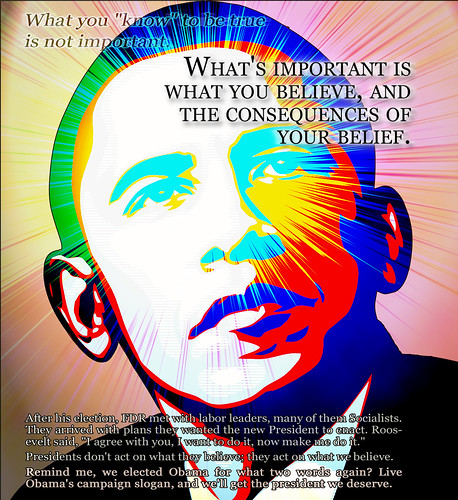
The set of things that can be known differs in both quantity and nature from the set of things that can be believed. Which implies the possibility that sometimes they complement each other. Beliefs are sometimes more desirable than facts for these reasons:

  1. Facts don't give a complete picture, because there are inevitably facts you don't know.
  2. Facts can seduce you into believing something false, because facts correlated with one perspective don't necessarily justify that perspective. E.g. it may be a fact that you met a Communist in College, but that doesn't justify the perspective that higher ed is Communist. This is how logical fallacies work. However, the fact that you met a Christian in church does work to justify the perspective that church is Christian.
  3. Facts may produce a picture that's incoherent. This is why PR firms for immoral companies always seem to drum up a litany of facts to justify whatever they want to do.

Beliefs, on the other hand, can be more powerful than facts (especially when supported by facts), because the picture is complete enough to justify action, true enough to work from, and coherent enough to get people to buy onto it. If beliefs didn't have power, religion, advertising, public relations, politics, etc. would have never come about.

Case in point: cynicism about how bad congress is and how ineffective politics are is what allows Republicans to do whatever they want, because people continue to vote for them out of cynicism.

25 May 2012

When I Would Vote Republican

Psychiatry is Thought Policing. The Thought Police, especially in public schools, are trying to outlaw emotions and vast territories of free thought. There is nothing positive about psychiatry.

In order to advance their agenda of control and mental slavery, the Thought Police first make school life intolerable, then when any student in any way expresses how intolerable school life is, they use fear tactics to frighten parents into believing their son or daughter has something called a "mental illness" (a thing which they simply made up) and that the kid cannot be trusted to think for themselves. They then encourage every effort to forcibly disallow the child to think for themselves and make authority figures think for them. This, of course, causes the child immense suffering, which they will obviously express, and when they do, it confirms their proposition that they have a "mental illness."

No tactic is too extreme to force the child not to think for themselves. Schools have been known to put children in isolation for hours and not allow them to go to the bathroom. They also torture children with electric shocks to get them to fall in line. If they express suicidality (who wouldn't in such a situation?) they use police force to incarcerate them and deny them all basic rights in a "mental hospital" (prison). Abuse is rampant at these hospitals. While according to the first Amendment, people should be allowed to videotape orderlies at these hospitals, if you try to force them to respect this right, they will violently tackle you to the ground, take away your camera permanently, put you in isolation, not allow you to eat with the other inmates, and put you on a higher dosage of mind-killing medications in order to subdue you.

Parents naturally have a bond for their children. So when they are afraid for them, they take control of the situation. This instinct is twisted and perverted into a sadistic form of mind-control and manipulation by the Thought Police. If you can get a parent to believe that their child has illegal thoughts ("mental illness"), they will use any and all tactics to force the child to think the way they prescribe. They will try to "help," which in essence means torture and traumatize the child into allowing the parent totalitarian mind-control to force out the illegal thoughts.

How do they frighten parents into becoming proxy Thought Police? Consider a publication I found at the Idaho Department of Health and Welfare, entitled "Red Flags in Children's Behavior." What exactly are some of these "red flags?" For adolescents, some include, "drug and alcohol use," "difficulty with relationships," "inattention to appearance or grooming," "risk taking behaviors with little thought of consequences," "extreme sensitivity to rejection or failure," "social isolation." In other words, being a normal adolescent is illegal. In order to satisfy the Thought Police, you must be a completely abnormal teenager--a freak. But of course, if you ever get depressed because you're a freak, that's an illegal thought, and they will bear down on you using every tactic they have in their arsenal.

According to the Thought Police, humanity is illegal. And to punish being human, they will torture you and traumatize you any way they can.

I am a solid Liberal, but the Republicans have a great track record against psychiatry. If Democrats EVER take up the position that we should "help" people with "mental illness," I won't care about the environment, I won't care about gay rights, I won't care about rampant corporate corruption, I won't care about civil liberties, I won't care about domestic spying, I won't care about foreign wars, I won't care about militarizing the police, I won't care about the war on drugs, I won't care about regulation of Wall Street; if Democrats EVER try to "help" people with "mental illness," I WILL vote Republican. Period.

It is imperative that right-thinking people let the world know how we feel about the disgusting anti-human institution of psychiatry and oppose it in any possible way we can.

23 February 2012

Everyone in Power is an Anarchist

By definition.

If you're in power, that means you answer to no one in the context of that power. And therefore, in that context, you are by definition an anarchist.

Let us be clear here: anarchy doesn't mean chaos, violence, satanism, or anything of the like. It is a very simple concept: an- (lack of) archy (authority). In a state of anarchy, there is no authority to answer to but yourself and God.

Everybody wants to be an anarchist. They may not say it, or even believe it. But it's true. No one wants someone working over them jostling them around. Which brings me to the next point: The secret to happiness in life.

Sir Ken Robinson, an education reformist, believes the secret to happiness in life is finding the place where what you do well meets what you want to do. There's a trendy little concept called "The Secret" making rounds which suggests that the secret to happiness in life is having positive affirmations. You get what you put out for.

But I would humbly like to suggest, that from my own experience, the secret to happiness in life is secretly implied in both of these concepts. Note that they both involve the idea of wishing or wanting. However, one must adequately define the state of actually getting what you want, which is often skirted around.

When you get what you want, it is a more complex notion then just getting a birthday present that you asked for. It's a state of mind. The state of mind is free from obstructions, because you have what you want. There is no more searching. You're just living in the moment, present with whatever you want. And one can easily say that if you "answer" to someone, you're by definition giving them the ability to obstruct what you want.

The secret to happiness in life, therefore, is to find a state of anarchy. An open system. And it needn't be a lonely one. There is such a thing as a truncated pyramid—where there is room enough at the top for more than one person. Co-equal anarchy is the best way to live, do work, or do whatever you want.

And here's the beautiful part—we all want the same thing. So when you're in a state of anarchy, with other human beings, there is no need to worry about stepping on each other's toes, because you know you all are on the same team. This sense of honesty is how human institutions function.

If you're in a system that is not open, and people do step on each others' toes, I've found that one's actions do bear fruit, in some way, even if faint. I act as if the entire world is required to be ethical, and work toward that end. So far, it has not borne bad fruit. And in fact, it's borne some pretty amazingly good fruit. And there are many moments when I truly feel I'm no longer under someone else's thumb as a result.

Some Thoughts on an Age of Aquarius Part 3: Compassion

All parts include: Part 1: Ignorance; Part 2: Seduction; Part 3: Compassion; Part 4: Psychiatrists; Part 5: Hacking vs. Lying.

Compassion

Due to the fact of the two previous points, particularly the first, it is necessary to insist on higher standards for compassion. Yes, that means compassion for murderers, rapists, adulterers, kidnappers, drug dealers, and so on and so forth. We all like to villainize people for certain things. But the fact of the matter is, you never know anymore whether the information is accurate, or whether the act was more pitiable than hateful. At the very least, I tend to think we should be even more careful not to judge. Cyberbullying is a terrible risk with the Internet.